
Unveiling the Evolution: Statistical vs. Non-Statistical Models in Natural Language Generation

BLOG
X
min read

Introduction

In the continually changing realm of Natural Language Generation (NLG), understanding the distinction between statistical and non-statistical models is crucial. These two paradigms have undergone significant transformations over the years, from the rudimentary Markov Chains to the sophisticated Transformers used in state-of-the-art chat models like GPT-3. In this blog, we will embark on a journey through the evolution of NLG, tracing the progression from statistical models to the cutting-edge neural networks, including Recurrent Neural Networks (RNNs) and Long Short-Term Memory (LSTM) networks, to finally land on the transformational power of Transformers. We'll also explore how software engineers can harness the benefits of NLG models like Chat-GPT.

The Birth of Statistical Models

Statistical models were among the earliest tools employed for NLG. At their core, these models rely on statistical probabilities to generate text. One of the simplest statistical models is the Markov Chain. In this model, the next word in a sentence is predicted based on the probability of occurrence given the previous words. While Markov Chains can generate coherent text, they lack context awareness and long-term dependencies, making them suitable only for the most basic NLG tasks. For example, Markov chains are randomly determined processes with a finite set of states that move from one state to another. These sets of transitions from state to state are determined by some probability distribution.
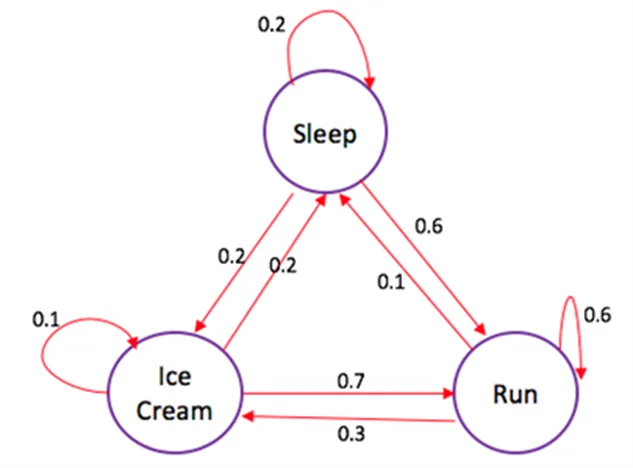
Consider the scenario of performing three activities: sleeping, running, and eating ice cream.

• Each node contains the labels, and the arrows determine the probability of that event occurring.

• In the above example, the probability of running after sleeping is 60% whereas sleeping after running is just 10%.

• The important feature to keep in mind here is that the next state is entirely dependent on the previous state.

• The next state is determined on a probabilistic basis. Hence Markov chains are called memoryless.

Conclusion:

Since they are memoryless these chains are unable to generate sequences that contain some underlying trend. They simply lack the ability to produce content that depends on the context since they cannot consider the full chain of prior states.

Advancements with RNNs and LSTMs

To overcome the limitations of Markov Chains, the NLG community turned to more advanced tools like Recurrent Neural Networks (RNNs) and Long Short-Term Memory (LSTM) networks. RNNs introduced the concept of recurrent connections, allowing information to persist through time steps. This architectural shift brought about significant improvements in NLG tasks.

LSTMs, a specialized form of RNNs, addressed the vanishing gradient problem that hindered the training of deep networks. By incorporating memory cells that can store and retrieve information over long sequences, LSTMs demonstrated impressive capabilities in handling context and generating more coherent text.

Nonetheless, both RNNs and LSTMs have limitations. They struggle with capturing very long-term dependencies and often suffer from training difficulties due to vanishing and exploding gradients. These issues sparked the need for a more potent NLG paradigm.

The Emergence of Transformers

The breakthrough in NLG came with the introduction of Transformers, a neural network architecture that revolutionized various NLP tasks, including text generation. Unlike RNNs and LSTMs, Transformers do not rely on sequential processing of input data. Instead, they process the entire input sequence in parallel, making them highly efficient and capable of handling long-range dependencies.

The Transformer architecture consists of an encoder-decoder structure. The encoder processes the input sequence and extracts contextual information, while the decoder generates the output sequence. What makes Transformers particularly powerful is the self-attention mechanism, which allows the model to weigh the importance of different input tokens when generating output tokens. This mechanism enables Transformers to capture complex patterns and dependencies within the data.

GPT and the Power of Transformers

The culmination of the Transformer's impact on NLG is exemplified by models like GPT (Generative Pre-trained Transformer). GPT-3, for instance, boasts a staggering 175 billion parameters, making it one of the most potent NLG models tell GPT-4, which has approximately 1.8 trillion parameters. This makes it 1000 times larger than GPT-3. GPT has proven its effectiveness in a wide range of tasks, from text generation to translation and even code generation.

The key strength of GPT-4 and its predecessors lies in their ability to generate human-like text with remarkable fluency and coherence. This is achieved through pre-training on large text corpora, enabling the model to learn linguistic nuances and common patterns in language usage. Fine-tuning on specific tasks further enhances its performance.

Statistical Models vs. Transformers: A Comparative Analysis

1. Context Awareness: Statistical models like Markov Chains lack context awareness. They generate text based solely on probabilities. In contrast, Transformers, especially GPT variants, exhibit a remarkable understanding of context and can generate text that is contextually relevant and coherent.

2. Long-term Dependencies: Statistical models struggle with long-term dependencies. RNNs and LSTMs provide some improvement but still face limitations. Transformers excel in handling long-range dependencies, making them suitable for a wide range of NLG tasks.

3. Scalability: Transformers, with their parallel processing capabilities, scale exceptionally well with increasing model size. Statistical models and RNNs/LSTMs face limitations in scalability and often require extensive engineering for larger models.

4. Training Data: Statistical models rely on predefined rules and statistical probabilities, limiting their adaptability to new data. Transformers, on the other hand, can be fine-tuned on specific tasks, allowing for greater flexibility and adaptability.

5. Parameter Size: Statistical models typically have a fixed number of parameters, making them less versatile. Transformers like GPT-3 can have an enormous number of parameters, providing a significant advantage in capturing complex language patterns.

Conclusion

The journey from simple statistical models like Markov Chains to the sophisticated Transformers like GPT-3 has transformed the landscape of Natural Language Generation. While statistical models laid the foundation for NLG, they were limited in their ability to capture context and handle long-term dependencies. RNNs and LSTMs represented a significant improvement but still had their challenges.

Transformers, with their self-attention mechanism and parallel processing, have emerged as the dominant force in NLG. Models like GPT-3 have demonstrated remarkable capabilities in generating human-like text, understanding context, and adapting to a wide range of tasks.


Modernizing Legacy Apps​

Maecenas mollis sagittis ante, eleifend ultricies sapien. Nam ultricies risus et augue auctor vulputate gravida eget sem. Quisque mollis gravida magna, eu semper eros pharetra in. Sed et elit sit amet odio rutrum consectetur vel vel ante. Praesent vitae elementum lacus. Vivamus efficitur nunc tortor, cursus lobortis purus placerat ut. Maecenas ut aliquet ante, vel finibus lorem. Nulla facilisi. Donec maximus elementum pulvinar.

test heading

h1 text

h3

Impact

Sample article featured image
Pellentesque posuere sem in ipsum venenatis, at bibendum lorem aliquam. Nullam condimentum tempus orci nec commodo. Maecenas malesuada elementum metus, non aliquam est elementum sed. Integer ac finibus ligula, id venenatis lectus. Mauris non eleifend enim. Pellentesque eu congue justo. In ornare dapibus nisi, sit amet feugiat neque. Vivamus mollis, lectus quis gravida viverra, risus ligula congue felis, ut laoreet sem nisi in tortor. Sed vel ligula nulla.
“Quisque mollis purus nec pulvinar rutrum. Duis faucibus sed orci vel pellentesque. Interdum et malesuada fames ac ante ipsum primis in faucibus. Donec non volutpat eros, nec placerat mi. Praesent porta felis ut urna sagittis, sit amet placerat nisl porttitor.”

Nunc tempor molestie velit id dictum. Aenean ac venenatis ipsum, sit amet sodales tortor. Pellentesque habitant morbi tristique senectus et netus et malesuada fames ac turpis egestas. Pellentesque posuere sem in ipsum venenatis, at bibendum lorem aliquam.

Nullam condimentum tempus orci nec commodo. Maecenas malesuada elementum metus, non aliquam est elementum sed. Integer ac finibus ligula, id venenatis lectus. Mauris non eleifend enim. Pellentesque eu congue justo. In ornare dapibus nisi, sit amet feugiat neque. Vivamus mollis, lectus quis gravida viverra, risus ligula congue felis, ut laoreet sem nisi in tortor. Sed vel ligula nulla.

data-acc-source-start

Ensure that Modernizing your Legacy Application is the Right Decision

Our expert consultants work closely with you to understand you organization's business drivers, then conduct an in-depth business goals and that every dollar invested is directed towards the right solution

Depend on a Tailored, Phased Application Modernization Strategy

Our expert consultants work closely with you to understand you organization's business drivers, then conduct an in-depth business goals and that every dollar invested is directed towards the right solution

Streamline the Transition from Old to New

Our expert consultants work closely with you to understand you organization's business drivers, then conduct an in-depth business goals and that every dollar invested is directed towards the right solution

data-acc-source-end

Lorem ipsum dolor sit amet, consectetur adipiscing elit. Curabitur elementum, elit a pellentesque placerat, nisl quam blandit orci, at maximus eros nunc nec lacus. Nullam euismod consequat libero, eget suscipit ligula lacinia nec. Nunc finibus dapibus quam, eu convallis magna. Nulla finibus ut risus in sodales. Cras tristique nisi non mattis volutpat. Nullam venenatis varius nisl, dictum ornare lorem dictum rhoncus. Nulla sem nunc, lobortis et massa sed, ultrices convallis justo. Quisque laoreet nibh sit amet arcu rhoncus accumsan. Proin at elementum lacus, at maximus mi. Curabitur vulputate urna mollis lacinia auctor. Donec venenatis finibus magna id tempor. Duis at mattis odio. Aenean eu tempus justo. Donec est arcu, vulputate quis risus et, pharetra imperdiet velit.

Vivamus ut dignissim quam.

No items found.
Article carousel image 1
Article carousel image 2
Article carousel image 3
Author
Mostafa Osama
Posted on
14 Sep 2023
We’re your partner in addressing

real human needs.

Align IT Initiatives with Strategic Business Goals
Plus sign iconMinus sign icon
10X
Increase in transactions
per second

Heading 1

Heading 2

Heading 3

Heading 4

Heading 5
Heading 6

Lorem ipsum dolor sit amet, consectetur adipiscing elit, sed do eiusmod tempor incididunt ut labore et dolore magna aliqua. Ut enim ad minim veniam, quis nostrud exercitation ullamco laboris nisi ut aliquip ex ea commodo consequat. Duis aute irure dolor in reprehenderit in voluptate velit esse cillum dolore eu fugiat nulla pariatur.

Block quote

Ordered list

  1. Item 1
  2. Item 2
  3. Item 3

Unordered list

  • Item A
  • Item B
  • Item C

Text link

Bold text

Emphasis

Superscript

Subscript

Modernizing Legacy Apps​

Maecenas mollis sagittis ante, eleifend ultricies sapien. Nam ultricies risus et augue auctor vulputate gravida eget sem. Quisque mollis gravida magna, eu semper eros pharetra in. Sed et elit sit amet odio rutrum consectetur vel vel ante. Praesent vitae elementum lacus. Vivamus efficitur nunc tortor, cursus lobortis purus placerat ut. Maecenas ut aliquet ante, vel finibus lorem. Nulla facilisi. Donec maximus elementum pulvinar.

Impact

Sample article featured image
Pellentesque posuere sem in ipsum venenatis, at bibendum lorem aliquam. Nullam condimentum tempus orci nec commodo. Maecenas malesuada elementum metus, non aliquam est elementum sed. Integer ac finibus ligula, id venenatis lectus. Mauris non eleifend enim. Pellentesque eu congue justo. In ornare dapibus nisi, sit amet feugiat neque. Vivamus mollis, lectus quis gravida viverra, risus ligula congue felis, ut laoreet sem nisi in tortor. Sed vel ligula nulla.
“Quisque mollis purus nec pulvinar rutrum. Duis faucibus sed orci vel pellentesque. Interdum et malesuada fames ac ante ipsum primis in faucibus. Donec non volutpat eros, nec placerat mi. Praesent porta felis ut urna sagittis, sit amet placerat nisl porttitor.”

Nunc tempor molestie velit id dictum. Aenean ac venenatis ipsum, sit amet sodales tortor. Pellentesque habitant morbi tristique senectus et netus et malesuada fames ac turpis egestas. Pellentesque posuere sem in ipsum venenatis, at bibendum lorem aliquam.

Nullam condimentum tempus orci nec commodo. Maecenas malesuada elementum metus, non aliquam est elementum sed. Integer ac finibus ligula, id venenatis lectus. Mauris non eleifend enim. Pellentesque eu congue justo. In ornare dapibus nisi, sit amet feugiat neque. Vivamus mollis, lectus quis gravida viverra, risus ligula congue felis, ut laoreet sem nisi in tortor. Sed vel ligula nulla.

data-acc-source-start

Ensure that Modernizing your Legacy Application is the Right Decision

Our expert consultants work closely with you to understand you organization's business drivers, then conduct an in-depth business goals and that every dollar invested is directed towards the right solution

Depend on a Tailored, Phased Application Modernization Strategy

Our expert consultants work closely with you to understand you organization's business drivers, then conduct an in-depth business goals and that every dollar invested is directed towards the right solution

Streamline the Transition from Old to New

Our expert consultants work closely with you to understand you organization's business drivers, then conduct an in-depth business goals and that every dollar invested is directed towards the right solution

data-acc-source-end

Lorem ipsum dolor sit amet, consectetur adipiscing elit. Curabitur elementum, elit a pellentesque placerat, nisl quam blandit orci, at maximus eros nunc nec lacus. Nullam euismod consequat libero, eget suscipit ligula lacinia nec. Nunc finibus dapibus quam, eu convallis magna. Nulla finibus ut risus in sodales. Cras tristique nisi non mattis volutpat. Nullam venenatis varius nisl, dictum ornare lorem dictum rhoncus. Nulla sem nunc, lobortis et massa sed, ultrices convallis justo. Quisque laoreet nibh sit amet arcu rhoncus accumsan. Proin at elementum lacus, at maximus mi. Curabitur vulputate urna mollis lacinia auctor. Donec venenatis finibus magna id tempor. Duis at mattis odio. Aenean eu tempus justo. Donec est arcu, vulputate quis risus et, pharetra imperdiet velit.

Vivamus ut dignissim quam.

No items found.
Article carousel image 1
Article carousel image 2
Article carousel image 3
Author
This is some text inside of a div block.
Posted on
This is some text inside of a div block.
Topics